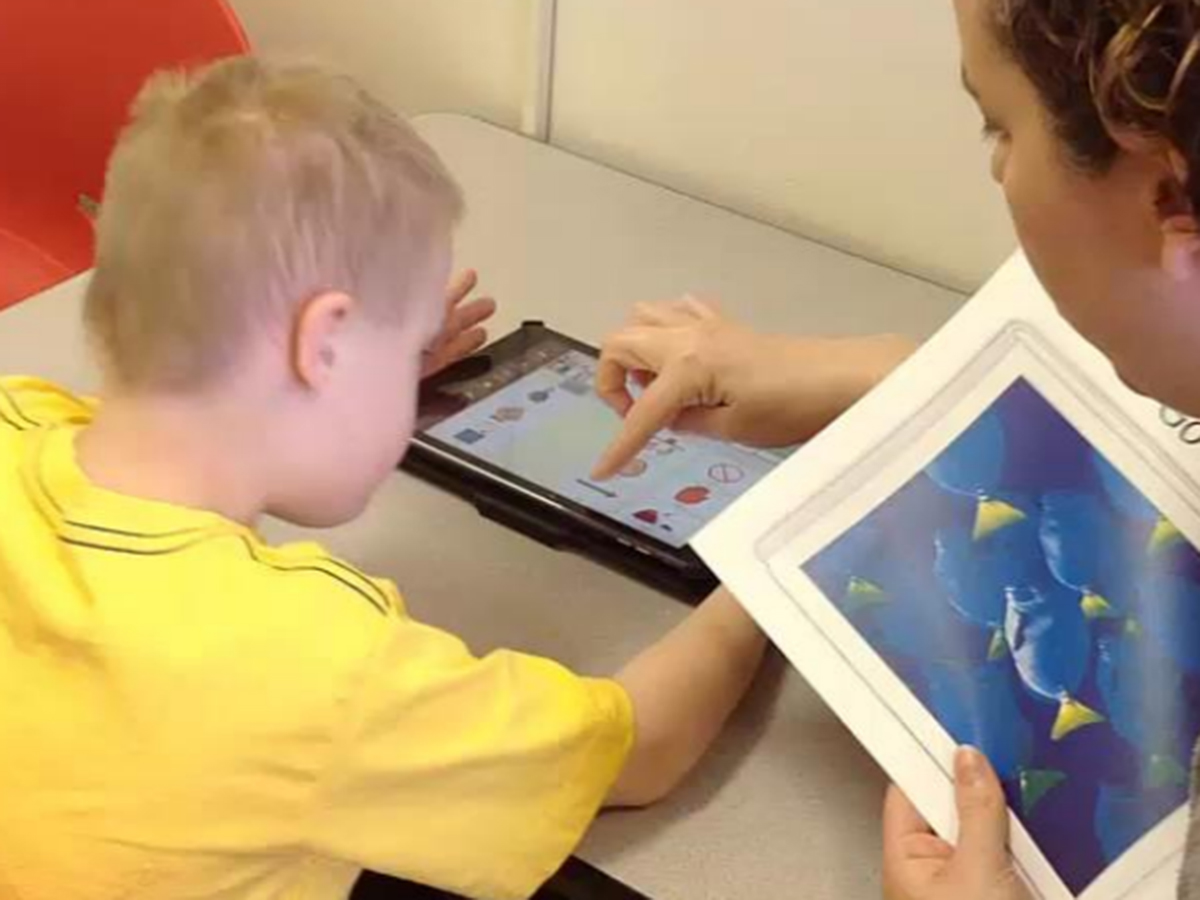
Kellie Bews , A Solutions Consultant for Tobii Dynavox presented on assistive technology and communication on December 13th during a DSAW webinar. We are summarizing the presentation here. Please access the recording of the webinar for further information.
The Need For Communication Devices
- 8 out of 1,000 people worldwide cannot use speech to communicate.
- 2-3 million people in the U.S. could benefit from speech generating devices.
- Only 5% of these people have a speech device
What is Augmentative & Alternative Communication (AAC)?
- AAC is any device, system or method that improves a person’s ability to communicate effectively and participate in the world around them.
- Can be implemented any time, but usually earlier in the care process is better
A Communication System Should:
- Increase participation in all environments
- Support timely interaction
- Provide meaningful language to the recipient
- Support language and literacy development
- Encourage successful day-to-day, face-to- face, real-time interaction
- Be age and level appropriate
AAC Myths
- Choosing to use an AAC system is giving up – “the easy way out”
- AAC will hinder speech and language development
- AAC is an individual’s sole communication modality
- The focus of AAC use is the assessment of devices and focus on technology
How do I know if someone could benefit from AAC?
Full Communication Success Screen Here
- Does the individual have a diagnosis that puts him/her at risk for speech or language challenges? (ASD, CP, aphasia, ALS, etc.)
- Does the individual have less than 20 words/signs/ signals that can be understood by unfamiliar listeners?
- Does the individual have difficulty communicating his/her ideas (e.g., asking for a desired item, telling a story, expressing an idea)?
Goals of AAC
- Communicating successfully NOW
- System that will be used for long-term communication (this may change as individual progresses
- Development of language and speech production through AAC use
The Process
- An individual has been identified as a possible AAC candidate by the team
- Referral for AAC evaluation
- Outpatient speech language pathologist
- Speech Language Pathologists in your school district
- District Contact Person (larger districts)
- CESAs
- AAC Referral Forms – beneficial for outside evaluators, i.e., private therapy clinics, outpatient SLPs
What is SGD Evaluation?
- Answers the questions:
- Why does this individual need a SGD?
- How they are communicating in their natural environment?
- Which features of an SGD are required to match their abilities and compensate for their areas of need?
Choosing a Communication System
- One size does not fit all
- Assessing Strengths/Weaknesses
- cognition
- language
- motor
- sensory
What Does Success Look Like?
- Increased attention to interactions
- Initiation of communication
- Use of more vocabulary
- Longer interactions
- Use of more tools or pages
- Enjoyment of interaction, and/or
- More independence in communication
Online Resources
- Trial Guides
- Lesson Plans
- Core Books
Resources, Resources and MORE Resources @ mytobiidynavox.com
WI Medicaid Recommendations
- 4-week trial across ALL communication environments – school, home and community
- Must demonstrate intent to communicate with device
- Focus on functional communication and conversation – “beyond requesting”
- Establish recommended equipment to be “least costly alternative”
- Demonstrated family advocacy
WI Medicaid FUNDING PACKET CHECKLIST
- Evaluation Report
- WI PA-DMEA
- Copy of current IEP
- Client Information Form
- Release of Benefits and Assignment
- Insurance card copies
- Supporting letters of advocacy
- Physician Rx
- Face-to-face physician visit notes (must state need for SGD and performed within 6 months of prescription)
Time and Effort for Success!